Nuclease vs DNase, RNase, Endonuclease, and Exonuclease
A practical B2B guide to nuclease terminology: how DNase, RNase, endonuclease, and exonuclease functions differ, and how those differences affect residual nucleic acid reduction, process clarity, and downstream compatibility.
Nuclease, DNase, RNase, Endonuclease, and Exonuclease: the practical difference
Nuclease is the broad category. DNase, RNase, endonuclease, and exonuclease describe what a nuclease acts on and how it cuts.
For process teams, the distinction matters because the right nuclease strategy can reduce residual DNA and RNA, lower viscosity, improve clarification behavior, and protect downstream steps from nucleic-acid-driven interference.
The short answer
Nuclease: any enzyme that degrades nucleic acids.
DNase: a nuclease that degrades DNA.
RNase: a nuclease that degrades RNA.
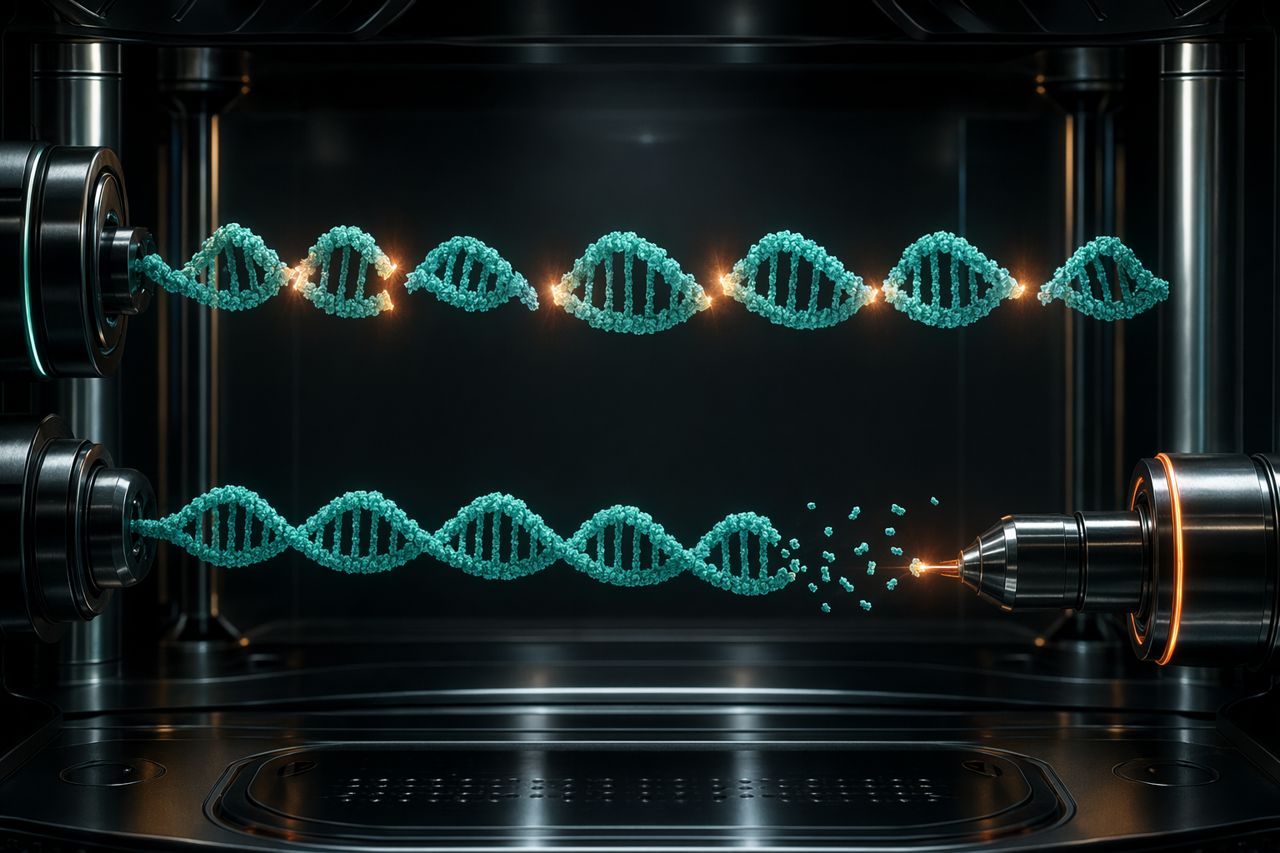
Endonuclease: cuts within a nucleic acid chain.
Exonuclease: trims nucleic acids from an end.
These terms are not mutually exclusive. A DNase can be an endonuclease. An RNase can be an exonuclease. A broad-spectrum nuclease may act on both DNA and RNA depending on its design and intended use.
Terminology map
Term
What it describes
Operational meaning
Nuclease
Umbrella category for nucleic-acid-degrading enzymes
Used when the target is residual nucleic acid reduction rather than one specific strand type
DNase
Substrate preference: DNA
Supports reduction of host-cell DNA, plasmid DNA, genomic DNA, or DNA-driven viscosity
RNase
Substrate preference: RNA
Supports RNA reduction, RNA background cleanup, and lower RNA-associated process burden
Endonuclease
Cut location: internal bonds
Rapidly fragments long nucleic acids, often improving viscosity and clarification behavior
Exonuclease
Cut location: strand ends
Progressively shortens nucleic acids and may be selected for more directional digestion needs
How the categories overlap
A nuclease label can describe two different attributes at once:
Substrate target: DNA, RNA, or both.
Cutting behavior: internal cutting or end-trimming.
For example:
A DNase endonuclease cuts DNA internally.
An RNase exonuclease trims RNA from strand ends.
A broad-spectrum nuclease may reduce both DNA and RNA into smaller fragments for easier downstream handling.
This is why procurement language should avoid relying on a single word. “Need nuclease” is a starting point; “need residual DNA and RNA reduction under defined process conditions” is closer to a usable specification.
DNase vs RNase
DNase: when DNA is the process burden
DNase is selected when DNA creates a measurable or operational problem. Common drivers include:
residual host-cell DNA control,
genomic DNA carryover,
plasmid or vector DNA reduction,
high viscosity from long DNA strands,
improved clarification after cell lysis or extraction,
reduced nucleic acid burden before chromatography, filtration, or formulation steps.
DNase selection is often tied to compatibility: buffer system, salt level, temperature window, exposure time, and downstream clearance expectations.
RNase: when RNA must be reduced or controlled
RNase is selected when RNA is the primary background or contaminant. Common uses include:
RNA cleanup in nucleic acid processing,
removal of RNA background from DNA-containing streams,
reduction of RNA-associated turbidity or analytical interference,
preparation of cleaner intermediate materials for downstream processing.
RNase can be powerful, so process teams typically define where it is introduced, how it is contained, and how it is managed downstream.
Endonuclease vs exonuclease
Endonuclease: fast internal fragmentation
Endonucleases cut inside nucleic acid chains. This can rapidly convert long DNA or RNA strands into shorter fragments. In manufacturing language, the benefit is often seen as:
lower viscosity,
improved mixing behavior,
easier clarification,
reduced filter loading risk,
better compatibility with downstream separation steps.
Endonuclease behavior is frequently preferred when the process challenge is bulk nucleic acid load or strand length.
Exonuclease: progressive end-trimming
Exonucleases work from nucleic acid ends. They may be selected when directional degradation, strand-end processing, or controlled trimming is more relevant than rapid bulk fragmentation.
In industrial purchasing, exonuclease requirements are usually more application-specific. The buying team should define the nucleic acid target, sample matrix, endpoint expectation, and downstream compatibility requirements before sourcing.
When a broad-spectrum nuclease is the right specification
Many industrial processes do not need a narrow DNase-only or RNase-only tool. They need reliable reduction of total nucleic acid burden.
A broad-spectrum nuclease can be the practical choice when the goal is to:
reduce both DNA and RNA carryover,
lower viscosity in lysates or biological intermediates,
improve separation performance,
decrease nucleic acid interference before downstream processing,
simplify enzyme selection across related process streams.
For procurement, the most useful specification is not only the enzyme class. It is the expected process outcome: what material is being treated, which nucleic acids matter, what downstream step follows, and what clearance or compatibility expectations must be met.
What buyers should specify before requesting nuclease pricing
Before sourcing nuclease, DNase, RNase, endonuclease, or exonuclease, define the operating window and commercial needs. This reduces back-and-forth and helps align supply with process reality.
Downstream unit operation after nuclease treatment
Required documentation and release expectations
Supply details
Development, pilot, or commercial scale
Preferred format and packaging size
Storage and handling requirements
Lot reservation needs
Expected order frequency
Documentation package required for vendor qualification
Common comparison questions
Is every DNase a nuclease?
Yes. DNase is a subtype of nuclease that targets DNA.
Is every nuclease a DNase?
No. Some nucleases target RNA, and some act on both DNA and RNA depending on their design and use case.
Is RNase the opposite of DNase?
Not exactly. DNase and RNase describe substrate preference. DNase acts on DNA; RNase acts on RNA. They are parallel categories under the broader nuclease family.
Does endonuclease mean DNase?
No. Endonuclease describes where the enzyme cuts: within the strand. It does not by itself specify whether the substrate is DNA or RNA.
Does exonuclease mean slower or weaker?
No. Exonuclease describes mechanism, not quality. It trims from strand ends and may be the right tool for specific strand-processing applications.
Procurement takeaway
If your process goal is broad residual nucleic acid reduction, ask for a nuclease aligned to the process matrix and downstream requirements. If the issue is specifically DNA or RNA, DNase or RNase language may be appropriate. If cutting pattern matters, specify endonuclease or exonuclease behavior as part of the requirement.
The cleanest purchasing request combines all three dimensions:
Target: DNA, RNA, or both.
Mechanism: internal fragmentation, end-trimming, or broad degradation.
Tell Strandfall what you are processing and what outcome you need. We will help translate nuclease terminology into a practical sourcing recommendation.