Nuclease is used in bioprocessing when residual DNA and RNA create practical manufacturing problems: high viscosity, slow clarification, membrane fouling, uneven chromatography behavior, and harder-to-control nucleic acid profiles. In the right process window, Nuclease (DNA/RNA-Degrading Enzyme) breaks long nucleic acid strands into smaller fragments that are easier to manage in downstream separation and removal steps.
For B2B teams, the value is not academic. The value is operational control: cleaner harvest handling, more predictable filtration, better downstream compatibility, and a supply profile that supports repeatable production.
What nuclease does in a bioprocess
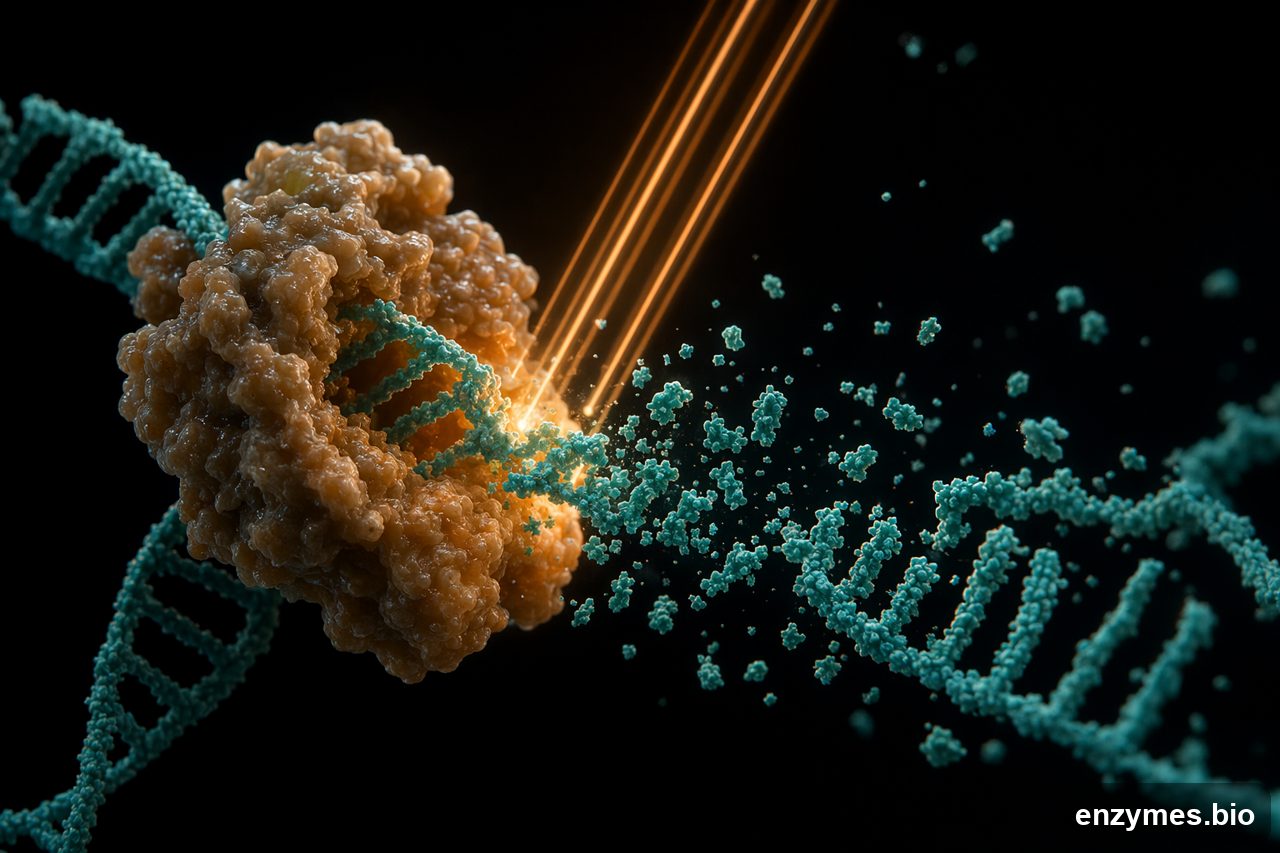
Nuclease catalyzes the degradation of DNA and RNA. In upstream and downstream workflows, that action is commonly used to reduce the burden of host cell nucleic acids, plasmid-related carryover, and process-derived nucleic acid contaminants.
In practical terms, nuclease can help convert a difficult, stringy, high-load process stream into a material that is easier to clarify, filter, concentrate, and polish. It does not replace downstream purification, but it can make downstream purification more controlled.
Core bioprocessing applications
Residual host cell DNA and RNA reduction
Residual nucleic acids can remain after cell growth, lysis, harvest, or product release. Nuclease is applied to reduce long-chain DNA and RNA before the material moves into filtration, chromatography, or final polishing.
Common use areas include:
Recombinant protein manufacturing
Microbial fermentation harvests
Mammalian cell culture harvests
Cell lysate processing
Viral vector and vaccine-related intermediates
Enzyme and biologics manufacturing workflows
The goal is usually not a single isolated effect. Teams are often trying to reduce nucleic acid burden while also improving stream behavior through the next unit operations.
Viscosity reduction in lysates and harvests
Nucleic acids can significantly increase viscosity, especially after cell disruption or lysis. High viscosity can slow pumping, reduce mixing efficiency, complicate centrifugation, and create uneven flow through filters.
Nuclease treatment can reduce that viscosity by fragmenting DNA and RNA. The operational benefit is clearer handling: better mixing, smoother transfer, more consistent clarification, and fewer process interruptions linked to difficult rheology.
Clarification and filtration support
Long nucleic acid strands can bind debris, retain fine particles, and contribute to fouling. When nuclease is placed before clarification or membrane filtration, it can support a cleaner separation profile and reduce the stress placed on downstream equipment.
Potential process benefits include:
Improved clarification behavior
Lower apparent fouling pressure development
Better filter throughput consistency
Reduced solids-associated nucleic acid carryover
More predictable transition into capture or concentration steps
Chromatography compatibility
Nucleic acids can interact with resins, influence binding behavior, and increase impurity load across chromatography steps. Nuclease treatment upstream of chromatography can help reduce large nucleic acid structures that interfere with clean separation.
The result can be a more stable feed profile for capture, intermediate, or polishing operations. This is especially relevant where product, impurity, and nucleic acid behavior overlap in the same process stream.
Viral vector and vaccine process support
In viral vector and vaccine-related workflows, nuclease is often evaluated as part of a broader impurity-control strategy. It may be used to reduce residual host cell nucleic acids, plasmid DNA fragments, or free nucleic acids that are not part of the intended product profile.
Process fit matters. Nuclease placement must be evaluated against product sensitivity, formulation constraints, purification sequence, and the ability to clear enzyme and fragments downstream.
Where nuclease is typically placed
Nuclease can be introduced at different points depending on the process objective.
After lysis or product release
This is a common placement when cell disruption releases large quantities of DNA and RNA. Nuclease has direct access to exposed nucleic acids and can reduce viscosity before clarification.
Before primary clarification
When nucleic acids are contributing to poor solids separation or filter fouling, nuclease treatment before clarification may improve the physical behavior of the stream.
Before chromatography or concentration
In some workflows, nuclease is used after initial clarification but before more selective downstream steps. The objective is to present a more compatible feed to chromatography, tangential flow filtration, or polishing operations.
During process development screening
Early screening can identify whether nuclease treatment creates enough benefit to justify integration. Teams typically compare treated and untreated streams for handling, filtration, impurity burden, and downstream performance.
Key process variables to evaluate
Nuclease performance depends on the process environment. Before specifying material for production, technical teams should evaluate:
Feed composition and nucleic acid burden
pH and conductivity range
Temperature exposure during treatment
Required cofactors or compatible additives
Contact time within the available process window
Product sensitivity to treatment conditions
Downstream clearance strategy for enzyme, fragments, salts, and impurities
Hold-time and mixing limitations
Compatibility with single-use systems, filters, resins, and buffers
A strong nuclease step is not simply an addition to the batch record. It is an engineered point of control.
What buyers should specify when sourcing nuclease
Procurement teams should align the purchase with process risk, not just catalog description. Useful sourcing questions include:
Is the enzyme suitable for the intended process environment?
Are lot-to-lot documentation and release criteria consistent?
Are scalable pack sizes available for development, pilot, and manufacturing?
What quality documentation is supplied with each lot?
Is change-control communication available for critical raw material planning?
Are lead times compatible with campaign scheduling?
Can the supplier support repeat ordering without unnecessary reformulation risk?
For manufacturing teams, nuclease is often a critical processing aid. Supply continuity, documentation, and lot confidence matter.
Nuclease selection criteria for B2B workflows
Broad DNA and RNA degradation profile
Many process streams contain mixed nucleic acid populations. A suitable nuclease should be evaluated for performance across the relevant DNA and RNA burden found in the target process.
Process-condition tolerance
The enzyme must function within the real operating conditions of the workflow. Buffer composition, salt level, temperature, pH, and process timing can all influence performance.
Downstream clearance compatibility
The treated fragments and enzyme itself must be compatible with downstream removal. This is especially important in regulated biologics and advanced therapy workflows where impurity strategy is scrutinized.
Documentation and traceability
For production use, buyers need more than a technical description. Lot documentation, traceability, and clear supply communication reduce qualification friction and support internal quality review.
Operational outcomes teams look for
When nuclease is well-matched to the process, teams may see:
Lower residual DNA and RNA burden entering downstream operations
Reduced viscosity after lysis or harvest
More stable clarification and filtration behavior
Less membrane fouling pressure on sensitive steps
Cleaner transition into chromatography
Improved process consistency between batches
Easier scale-up from development to manufacturing
The best outcome is control. A nuclease step should make the next operation easier to predict.
Common implementation mistakes
Adding nuclease too late
If nucleic acids have already caused fouling, aggregation, or poor separation, late treatment may not recover full process performance. Placement should be evaluated early.
Treating without a clearance plan
Nuclease treatment creates smaller fragments and leaves enzyme in the stream unless downstream steps remove them. Clearance strategy should be designed with the full process in mind.
Ignoring buffer compatibility
A nuclease may perform well in one process environment and poorly in another. Screening should use process-relevant materials, not only simplified model solutions.
Buying on price alone
For production workflows, low headline price can be outweighed by inconsistent lots, documentation gaps, long lead times, or limited technical fit. Procurement should weigh supply reliability alongside enzyme performance.
Practical evaluation workflow
A structured evaluation usually includes:
Define the target problem: residual nucleic acids, viscosity, filtration, chromatography compatibility, or a combination.
Identify the proposed placement point in the process.
Screen nuclease under process-relevant conditions.
Compare treated and untreated material through the next downstream step.
Confirm product compatibility and impurity clearance.
Review documentation, supply format, and change-control expectations.
Lock the preferred format before scale-up.
This approach keeps the decision tied to measurable process outcomes rather than enzyme description alone.
Why Strandfall for nuclease sourcing
Strandfall is built for technical purchasing teams that need a clear fit between enzyme performance, documentation, and production planning. We support nuclease sourcing for development, pilot, and manufacturing workflows where residual nucleic acid control and downstream compatibility are priorities.
Our approach is direct: understand the process constraints, align the enzyme format with the use case, and support repeatable supply without unnecessary complexity.
Request nuclease pricing
Tell us how nuclease fits into your process, and our team will help scope the right format, pack size, documentation set, and supply plan.