learn

Nuclease Handling and Storage Basics for Bulk Processing

Practical guidance for receiving, storing, thawing, dispensing, and controlling bulk nuclease used to reduce residual DNA and RNA in industrial bioprocess workflows.

Nuclease Enzyme Handling and Storage Basics

Nuclease is purchased for a practical job: reduce residual DNA and RNA so the process runs cleaner, downstream steps behave more predictably, and final material is easier to qualify. Handling and storage determine how reliably that job gets done.

This guide is written for procurement, production, and quality teams evaluating bulk nuclease for industrial use. It focuses on operational controls: receiving, cold-chain discipline, thawing, dispensing, contamination prevention, and supplier documentation.

Nuclease — nuclease handling storage

Why handling matters for nuclease performance

Nuclease is a protein enzyme. Its ability to fragment DNA and RNA can be affected by temperature exposure, repeated freeze-thaw events, incorrect dilution practice, incompatible process chemistry, and uncontrolled hold times.

For B2B buyers, the risk is not only loss of performance. Poor handling can create broader process issues:

  • Incomplete residual nucleic acid reduction
  • Higher viscosity or poor clarification behavior upstream of filtration
  • Variable downstream chromatography or membrane performance
  • Unexpected lot-to-lot differences during scale-up
  • Unclear deviation investigations because storage history was not controlled

A strong handling program makes nuclease use repeatable across operators, shifts, and production lots.

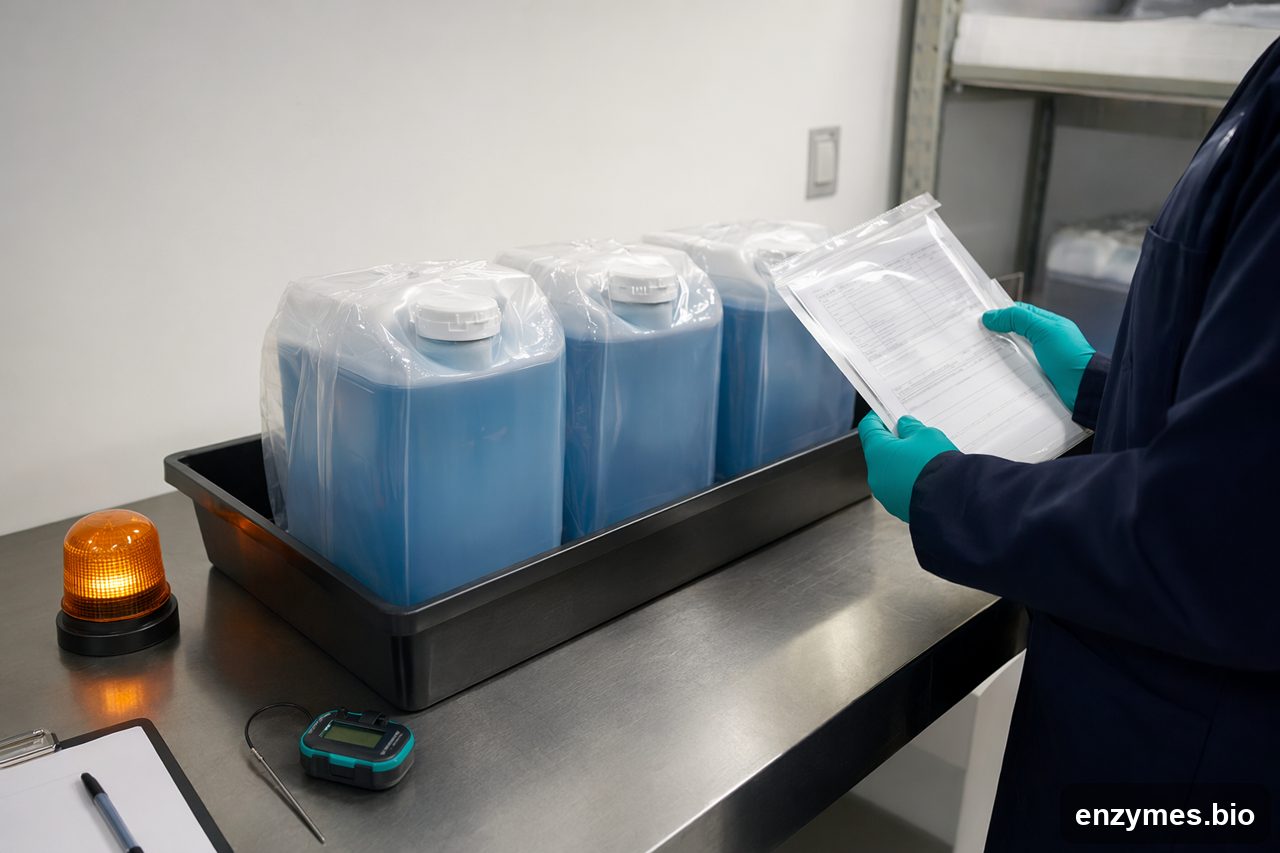
Receiving bulk nuclease

Treat receiving as the first control point, not an administrative step.

Check the shipment on arrival

When nuclease arrives, confirm:

  • Container identity and label match the purchase order
  • Lot number is visible and traceable
  • Tamper evidence is intact
  • Shipment condition matches the agreed storage requirement
  • Temperature indicators or shipping records are present when applicable
  • Certificate of analysis, safety data sheet, and technical documentation are available
  • Expiry or retest date supports the intended production window

If temperature exposure is outside the agreed range, quarantine the lot and request supplier disposition before use.

Record what matters

At minimum, log:

  • Date and time received
  • Lot number and container count
  • Receiving condition
  • Storage location assigned
  • Person responsible for release to use
  • Any shipment anomalies or documentation gaps

This creates a clean audit trail and helps separate supplier variability from facility handling variables.

Storage basics

Always follow the specific storage condition listed on the nuclease specification. Bulk nuclease may be supplied as a liquid, frozen liquid, or stabilized preparation, and each format has different handling limits.

Core storage controls

Use these controls as a baseline:

Nuclease — nuclease handling storage
  • Store within the supplier-defined temperature range
  • Keep containers sealed until use
  • Protect from repeated warming and cooling cycles
  • Avoid unnecessary exposure to room-temperature conditions
  • Keep away from direct light if the product documentation specifies light sensitivity
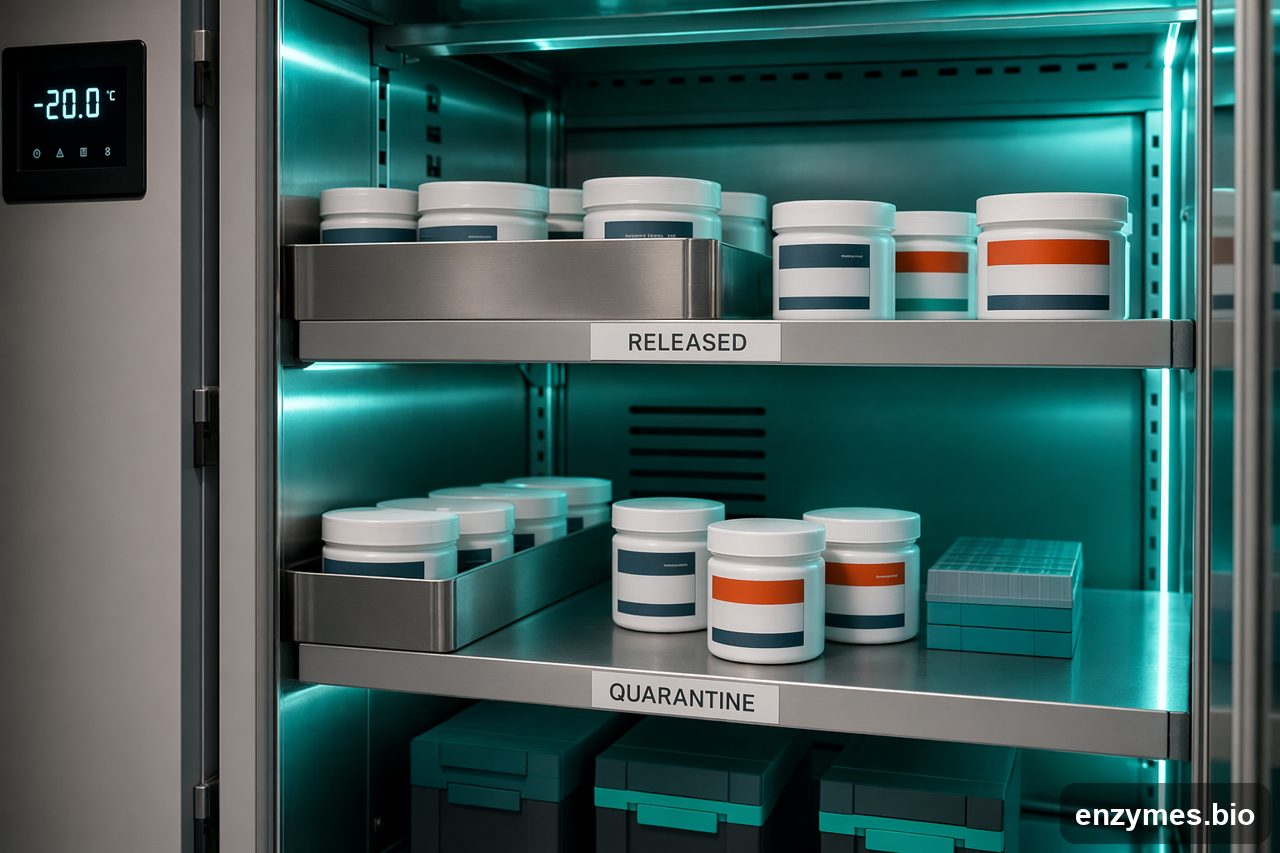
  • Segregate released, quarantined, expired, and in-use material
  • Use temperature-monitored storage with documented excursions

Plan inventory around real use

Nuclease is often ordered for campaign-based use. Align pack size with actual consumption so operators do not repeatedly open the same primary container. If the same lot will support multiple production days, build an aliquoting plan before the first thaw or opening event.

Thawing and mixing

If supplied frozen, thaw nuclease under controlled conditions using the supplier-approved approach. Do not improvise with high heat, aggressive agitation, or extended uncontrolled holds.

Good thaw practice usually includes:

  • Thaw only the amount required for near-term use
  • Use controlled cold or refrigerated thawing where appropriate
  • Mix gently after thawing to restore homogeneity
  • Avoid foaming, splashing, and unnecessary shear
  • Document thaw start time, completion time, and operator
  • Do not refreeze unless the supplier documentation allows it

Do not vortex bulk nuclease unless the product documentation explicitly supports that handling. Gentle inversion or controlled low-shear mixing is typically preferred for protein enzyme solutions.

Aliquoting and dispensing

Aliquoting reduces repeat freeze-thaw exposure and limits the risk that one handling event compromises the entire lot.

Dispensing controls

Use a controlled dispensing workflow:

  • Work in a clean, designated area
  • Use sterile or suitably clean containers compatible with the enzyme solution
  • Pre-label aliquots with product name, lot number, concentration or formulation identifier, aliquot date, storage condition, and expiry or use-by date
  • Minimize open-container time
  • Use calibrated dispensing equipment
  • Keep aliquots cold when the handling procedure requires it
  • Record each aliquot movement in inventory

Container compatibility

Confirm that the container and closure system are compatible with the nuclease format. For low-volume aliquots, adsorption to container surfaces can become meaningful. Procurement should confirm recommended packaging materials before committing to campaign-scale supply.

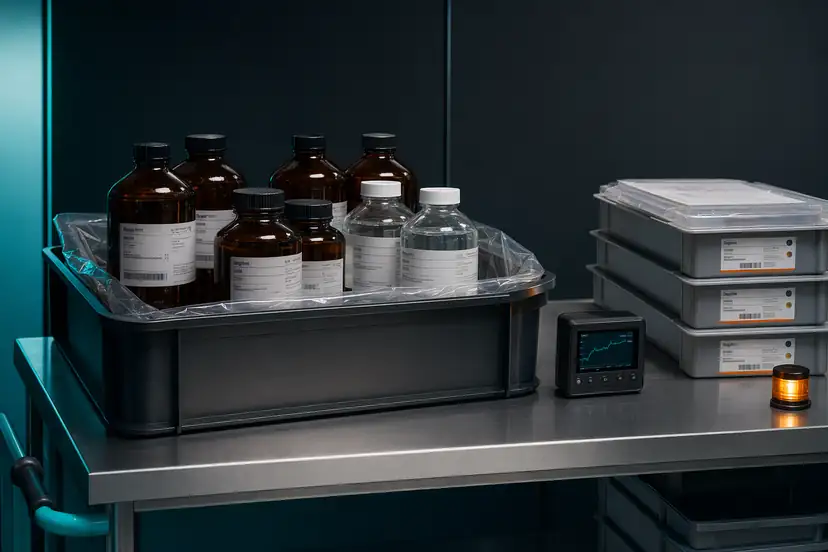
Preventing cross-contamination

Nuclease is designed to degrade nucleic acids. That is useful in the target process and undesirable anywhere DNA or RNA must be preserved.

Control cross-contact by using:

  • Dedicated tools where possible
  • Clearly labeled nuclease work areas
  • Closed containers during transfer
  • Defined cleaning procedures for benches, tools, and equipment
  • Separate handling from nucleic-acid analytics, reference materials, or sample preparation areas
  • Gloves and PPE changes between nuclease handling and sensitive workflows

This is especially important in facilities that run both production and analytical activities in close proximity.
Nuclease — nuclease handling storage

Process compatibility considerations

Nuclease performance depends on the process environment. Before purchasing bulk enzyme, confirm compatibility with the actual stream where it will be used.

Key variables include:

  • pH range of the process step
  • Salt level and conductivity
  • Temperature during treatment
  • Hold time available for nucleic acid reduction
  • Presence of chelators, detergents, solvents, denaturants, or reducing agents
  • Mixing capability at intended scale
  • Downstream removal or clearance strategy
  • Acceptable impurity profile for the final application

A nuclease that performs well in a simple buffer may behave differently in a viscous, cell-derived, high-salt, or chemically complex process stream. Pilot-scale verification should reflect real manufacturing conditions.

In-use hold time

Once nuclease is opened, thawed, diluted, or transferred into a day-use container, define an in-use hold time. The hold time should be based on supplier guidance and internal verification.

A practical in-use control plan should define:

  • Maximum time out of controlled storage
  • Maximum time after dilution, if diluted before addition
  • Maximum number of container openings
  • Temperature range during use
  • Discard point for remaining material
  • Documentation requirements for partial containers

This prevents informal carryover practices that can create unexplained process variation.

Dilution and addition to process streams

If nuclease is diluted before use, use the approved diluent and prepare only what the batch requires. Confirm that the diluent does not interfere with the enzyme, the process stream, or downstream purification.

During addition:

  • Add nuclease at the defined process point
  • Ensure adequate mixing without damaging the product stream
  • Avoid dead zones in tanks or single-use assemblies
  • Confirm addition sequence with buffers, salts, or cofactors specified by the process
  • Record lot number, quantity added, time of addition, and operator

The goal is controlled contact between enzyme and substrate, not simply adding enzyme to the vessel.

Documentation procurement should request

Before approving a bulk nuclease supplier, request documentation that supports production use and change control.

Useful documents include:

  • Certificate of analysis for each lot
  • Safety data sheet
  • Product specification
  • Recommended storage and handling instructions
  • Shelf-life or retest policy
  • Shipping condition statement
  • Allergen, animal-origin, or raw material statements when relevant
  • Manufacturing site and quality system overview
  • Change notification policy
  • Lot traceability information
  • Available packaging formats and minimum order quantities

Procurement should also confirm lead time, reserve inventory options, and whether the supplier can support repeat lots for validation or scale-up.

Common handling mistakes to avoid

Avoid these failure modes:

  • Leaving bulk nuclease at room temperature while staging multiple materials
  • Opening one primary container repeatedly across many production days
  • Thawing quickly with uncontrolled heat
  • Using unqualified dilution buffers
  • Storing aliquots without lot traceability
  • Refreezing material without documented permission
  • Handling nuclease near nucleic-acid-sensitive analytical work
  • Assuming small-scale performance will translate without process verification
  • Using expired or temperature-excursion material without formal disposition

Most nuclease failures are preventable when storage history and in-use handling are controlled.

Pre-purchase checklist for bulk nuclease

Use this checklist before placing a production order:

  1. Confirm intended application and residual nucleic acid target.
  2. Confirm the process conditions where nuclease will be added.
  3. Request storage, thawing, dilution, and in-use handling guidance.
  4. Select packaging that matches batch size and campaign frequency.
  5. Confirm documentation required by quality and regulatory teams.
  6. Establish receiving, quarantine, release, and inventory controls.
  7. Define aliquoting and in-use hold procedures.
  8. Plan pilot verification under real process conditions.
  9. Confirm lead time, lot reservation, and change notification expectations.

What good nuclease supply looks like

A strong bulk nuclease program should feel controlled. Operators know how to thaw and dispense it. Procurement knows what documentation will arrive with each lot. Quality can trace every container. Process teams see consistent reduction of DNA and RNA burden without introducing avoidable downstream complications.

That is the operational value: less uncertainty, cleaner processing, and better lot-to-lot confidence.

Request pricing or technical fit support

If you are evaluating nuclease for bulk processing, Strandfall can help match packaging, documentation, and supply planning to your manufacturing workflow.

Prefer a fast commercial response? Use the form to get pricing, packaging options, and lead-time guidance for bulk nuclease supply.
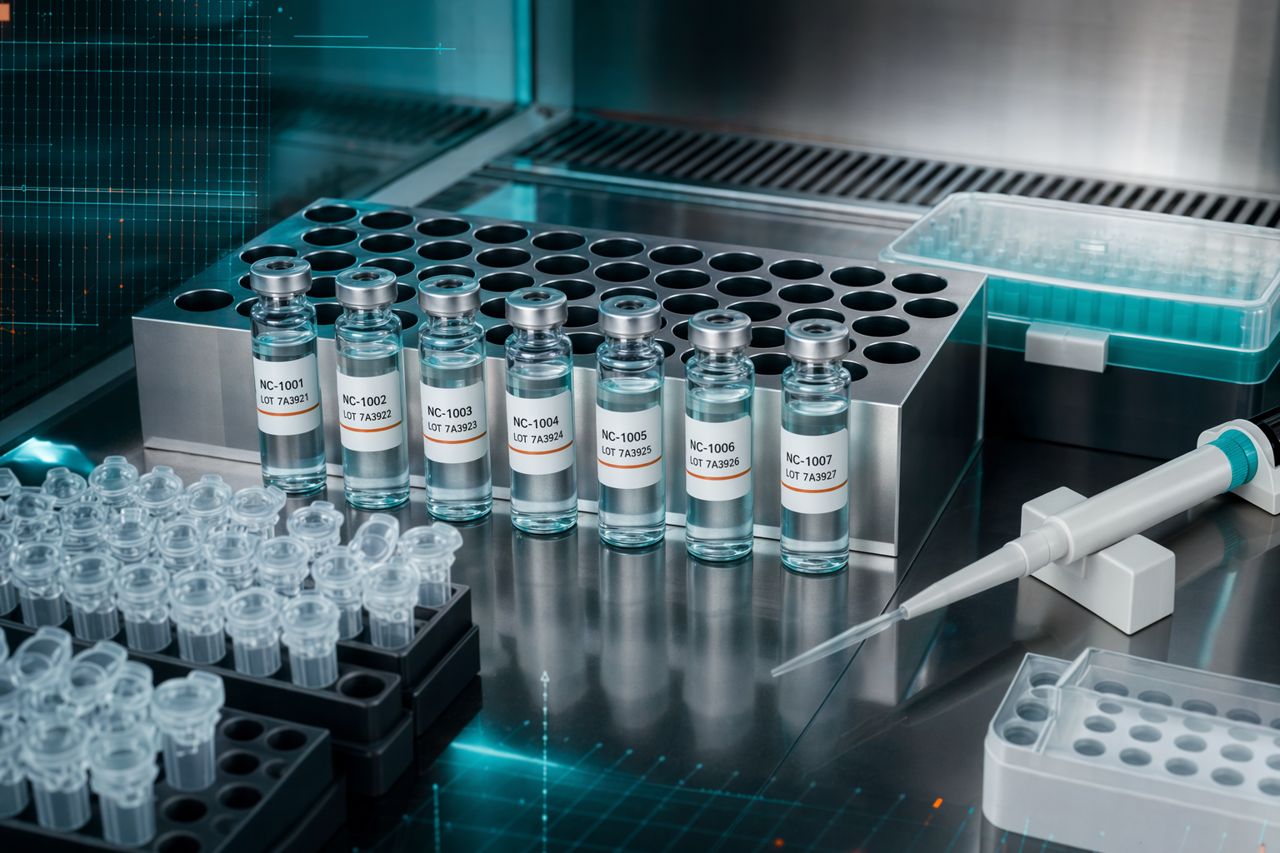
Nuclease Handling and Storage Basics for Bulk ProcessingNuclease Handling and Storage Basics for Bulk ProcessingNuclease Handling and Storage Basics for Bulk Processing
Keep exploring

More from Strandfall

Get pricing

Request pricing & specs

Tell us your application and volume — we reply with pricing, specs, and lead time.