learn
What Is Nuclease Enzyme? Function, Uses, and Sourcing Criteria
A buyer-focused explanation of nuclease enzymes: how they degrade DNA and RNA, where they are used, and what to evaluate before sourcing for industrial or bioprocess workflows.
A buyer-focused explanation of nuclease enzymes: how they degrade DNA and RNA, where they are used, and what to evaluate before sourcing for industrial or bioprocess workflows.
A nuclease is an enzyme that breaks down nucleic acids. In practical terms, it cuts DNA and RNA strands into smaller fragments so they become easier to manage, remove, or carry through a defined process without disrupting clarification, filtration, purification, or product quality expectations.
For B2B buyers, nuclease is not just a technical ingredient. It is a process-control tool. The value is measured in operational outcomes: lower residual nucleic acid burden, reduced lysate viscosity, improved process clarity, better downstream compatibility, and more predictable lot-to-lot behavior.
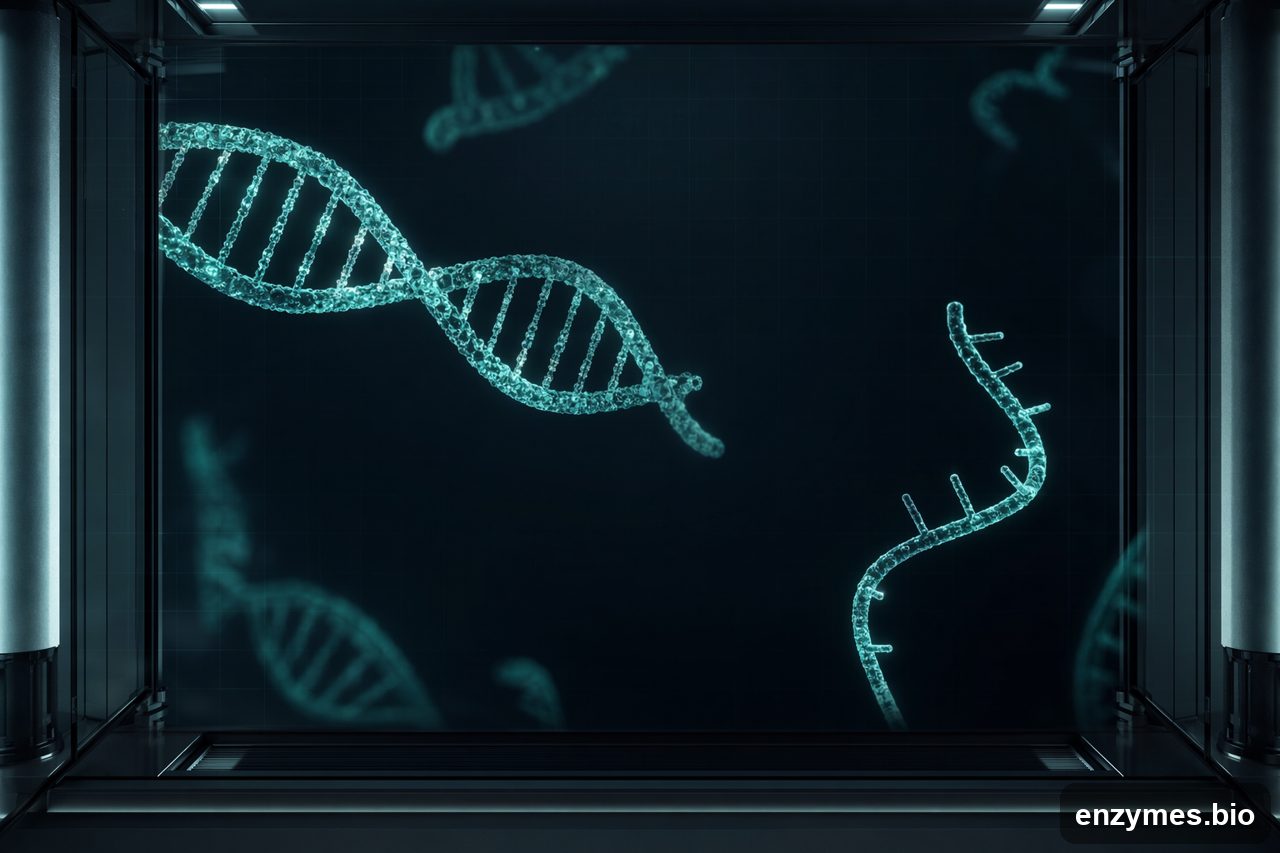
Nuclease (DNA/RNA-Degrading Enzyme) refers to enzymes that hydrolyze the phosphodiester bonds in nucleic acid chains. Depending on the enzyme type and formulation, a nuclease may act on DNA, RNA, single-stranded material, double-stranded material, or a broad range of nucleic acid structures.
In manufacturing language, nuclease helps convert long, high-molecular-weight nucleic acid polymers into shorter fragments. This can make complex biological mixtures less viscous and easier to clarify.
Nuclease reduces the size and persistence of DNA and RNA in a process stream. That function can support several outcomes:
Nuclease is typically introduced when nucleic acids are accessible and when lowering viscosity or residual DNA/RNA burden will benefit later steps. In many workflows, this is after cell disruption, lysis, or extraction, and before clarification or chromatography.
The enzyme contacts DNA and/or RNA in the process stream, fragments the strands, and changes the physical behavior of the mixture. Long nucleic acid chains that contribute to viscosity become shorter fragments that are easier to separate, dilute, bind, wash, or remove according to the process design.
The best point of addition depends on the substrate, buffer conditions, temperature exposure, process hold time, impurity profile, and the sensitivity of downstream operations to enzyme carryover.
Nuclease is used wherever DNA or RNA content creates a processing challenge or quality risk. Common application areas include:
Cell lysates can contain host cell DNA and RNA that increase viscosity and interfere with clarification. Nuclease can help condition the lysate before filtration or chromatography.
Nuclease may be used to reduce unwanted nucleic acid burden in complex biological streams where residual DNA/RNA control is part of the process strategy.
When disrupted cells release genomic DNA, viscosity can rise quickly. Nuclease treatment can improve handling, mixing, transfer, and separation behavior.
Nuclease can support controlled removal of nucleic acids during production of reagents, extracts, and enzyme systems where background DNA or RNA is undesirable.
Fermentation-derived materials often contain cellular debris and nucleic acids. Nuclease can support clarification and downstream flow where viscosity and fouling are limiting factors.
Nuclease products vary in specificity and process fit. The most important distinctions are functional rather than academic:
For sourcing, the key question is not only what the enzyme can degrade, but whether it performs reliably in your matrix and whether its documentation fits your production environment.
When evaluating nuclease supply, procurement and technical teams should align on the following points before requesting pricing:
Target substrate
Confirm whether the process challenge is DNA, RNA, or mixed nucleic acid burden.
Process matrix
Provide information on lysate type, fermentation origin, cell line, extract composition, salt conditions, detergents, and other known inhibitors or stabilizers.
Operating window
Define the temperature range, pH range, hold time, and addition point expected in production.
Downstream steps
Identify filtration, chromatography, concentration, or formulation steps that could be affected by residual nucleic acids or enzyme carryover.
Quality expectations
Review documentation needs, impurity profile, change notification expectations, traceability, and lot release requirements.
Scale and supply continuity
Confirm whether the nuclease is needed for laboratory development, pilot production, routine manufacturing, or multi-site supply.
A nuclease step is working well when it produces measurable process improvement without introducing new control problems. Signs of good fit include:
Use these questions to prepare a technical sourcing request:
Nuclease is a DNA/RNA-degrading process enzyme used to reduce nucleic acid burden, improve process clarity, and support reliable downstream manufacturing.
If you are defining a nuclease step, comparing sources, or scaling from development to production, send your process requirements and we will respond with fit guidance and pricing.
Tell us your application and volume — we reply with pricing, specs, and lead time.